A historical map of the early Bangkok era
The NineArmies' Waron the map
In late 1785 Burma sent nine armies into Siam from five directions, from Chiang Saen in the north to the island of Thalang (Phuket). This map shows where each army came in, where the Siamese met it, where they fought, and what there is to see and eat in those places today, along with the stories of the heroines who defended their towns in the same era.
- 9Burmese armies
- 144,000men, by Thai sources
- 5directions of attack
- 41points on the map
Where the nine armies came in, and where Siam met them
Tap a number on the map or a button in the list to highlight one route, then tap its name to open that route's zoomable map, with every battle point, photos, and places to visit and eat.
- Enemy armies (dashed line)
- Siamese armies (solid line)
- Number = the battlefield of that route
- Bangkok
The six fronts of the Nine Armies' War
- 1The Battle of Lat Ya: the Burmese main force through Three Pagodas PassDecember 1785 – February 1786
The Burmese vanguard was broken at Lat Ya on 17 February 1786. King Bodawpaya's royal army fell back to Martaban without ever coming down to fight.
- 2The Battle of Khao Ngu, Ratchaburi: the 2nd army from TavoyFebruary 1786
The Burmese vanguard was broken at Khao Ngu and the rear column at Chao Khwao Pass. The whole 2nd army withdrew to Tavoy.
- 3The southern campaign: Chumphon, Chaiya and Nakhon Si ThammaratDecember 1785 – March 1786
The Burmese were broken at Chaiya in March 1786 and withdrew to Mergui. Siam recovered all the southern towns.
- 4The defence of Thalang: Thao Thep Krasattri and Thao Si SunthonDecember 1785 – 13 March 1786
The people of Thalang held their town for a little over a month. The Burmese withdrew on 13 March 1786. Khun Ying Chan became Thao Thep Krasattri and Khun Muk became Thao Si Sunthon.
- 5The northern campaign: Lampang and Pak PhingDecember 1785 – March 1786
The Burmese vanguard was broken at Pak Phing on 18 March 1786. The Siamese army marched up to relieve Lampang, and the 3rd army fell back to Chiang Saen.
- 6The 9th army through Mae Lamao Pass to TakEarly 1786
The 9th army withdrew through Mae Lamao Pass in March 1786, after learning that the Burmese had been broken at Pak Phing.
What came after
- 7The Tha Din Daeng campaign: Siam strikes at the frontierFebruary 1787
The Burmese camps at Tha Din Daeng and Sam Sop fell in three days, and the crown prince withdrew to Martaban. It was the last time Burma sent a large army in through Three Pagodas Pass.
- 8The stand at Thung Samrit: Thao Suranari and the people of KoratFebruary–March 1827 (BE 2369 in most Thai books)
The people of Nakhon Ratchasima routed their guards and the force sent after them. Chao Anouvong withdrew from Nakhon Ratchasima, and the king made Khun Ying Mo Thao Suranari.
The mark ≈ means an approximate position. Borders on the map are present-day borders, shown only to help you find places. The routes are approximate lines drawn from the chronicles and later studies, not the actual path step by step. Dashed lines are enemy armies; solid lines are Siamese armies.
Who were the nine armies?
Five of the nine armies, 89,000 men in all, came in by the same route, Three Pagodas Pass. The other four went against the towns of the north, the west and the south.
| Army | Commander | Men | Base | Target | Outcome |
|---|---|---|---|---|---|
| 1st | Mingyi Mingaung Kyaw, later replaced by Kinwun Mingyi | 10,000 | Mergui (Myeik) | Chumphon, Chaiya and Nakhon Si Thammarat; Takua Pa and Thalang | The land force was broken at Chaiya; the fleet failed to take Thalang See the route: The southern campaign → See the route: Defence of Thalang → |
| 2nd | Anaukpet Taik Wun | 10,000 | Tavoy (Dawei) | Ratchaburi and Phetchaburi, then on to join the 1st army at Chumphon | Its vanguard was broken at Khao Ngu, Ratchaburi See the route: Battle of Khao Ngu, Ratchaburi → |
| 3rd | Thado Thiri Maha Uzana, lord of Toungoo | 30,000 | Chiang Saen | Lampang, Sawankhalok, Sukhothai and Phitsanulok | Besieged Lampang but could not take it; its vanguard was broken at Pak Phing See the route: The northern campaign → |
| 4th | Myin Wun (Mingyi Maha Thimkhong) | 11,000 | Martaban (Mottama) | Kanchanaburi, then on to Bangkok | Broken at Lat Ya See the route: Battle of Lat Ya → |
| 5th | Myinme Wun | 5,000 | Martaban (Mottama) | Kanchanaburi | Broken at Lat Ya See the route: Battle of Lat Ya → |
| 6th | Prince Kama (Takhaeng Kama), a son of King Bodawpaya | 12,000 | Martaban (Mottama) | To support the vanguard | Withdrew without fighting See the route: Battle of Lat Ya → |
| 7th | Prince Sagu (Takhaeng Chakku), a son of King Bodawpaya | 11,000 | Martaban (Mottama) | To support the vanguard | Withdrew without fighting See the route: Battle of Lat Ya → |
| 8th | King Bodawpaya (the royal army) | 50,000 | Martaban (Mottama) | Bangkok | Withdrew to Martaban when the vanguard was broken See the route: Battle of Lat Ya → |
| 9th | Kyawgaung Nawrahta | 5,000 | Martaban (Mottama) | Tak and Kamphaeng Phet | Took Tak, then withdrew without a battle See the route: The 9th army at Tak → |
| All nine armies | 144,000 | Figures from Prince Damrong's Thai Rop Phama (Our Wars with the Burmese); the Burmese chronicle gives about 134,000 men | |||
Read the summary of the war, and how Siam deployed its armies →
Start here
Real places you can visit today
Battlefields, monuments and old towns along the routes. Each page tells what happened there, with nearby sights and food and a link for directions.
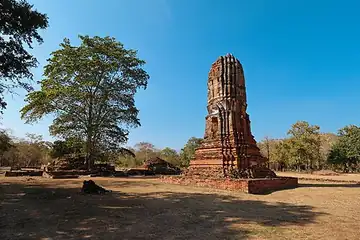 Kanchanaburi · Battle of Lat YaLat YaLat Ya, at the foot of the Khao Banthat hills above the old town of Kanchanaburi, is where Prince Maha Sura Singhanat took 30,000 men to face the…
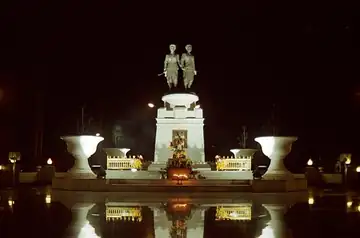 Phuket · Defence of ThalangTha RueaA Burmese fleet of about 3,000 men landed on Thalang island at Tha Ruea Taphao, believed to be in the area of today's Ban Tha Ruea, and built camps…
 Ratchaburi · Battle of Khao Ngu, RatchaburiKhao NguKhao Ngu is a group of limestone hills about 8 kilometres north-west of the town of Ratchaburi. In the Nine Armies' War the vanguard of the 2nd army…
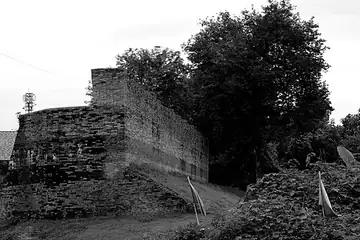 Lampang · The northern campaignLampangIn December 1785 Burma's 3rd army, 30,000 men, marched down from Chiang Saen and laid siege to Lampang. Chao Kawila, its ruler, held the town for…
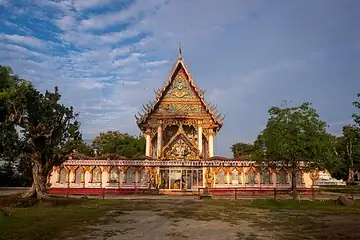 Phuket · Defence of ThalangThalang townAt the time of the Nine Armies' War the town of Thalang stood at Ban Don, in today's Thalang district. The townspeople built several camps to meet…
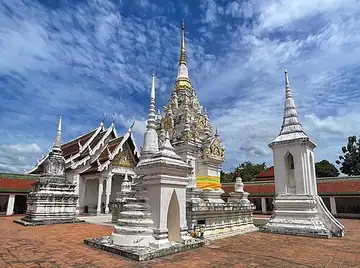 Surat Thani · The southern campaignChaiyaChaiya is an ancient town on Ban Don Bay. In the Nine Armies' War Burma's 1st army burned the whole town in late 1785, and three months later it was…
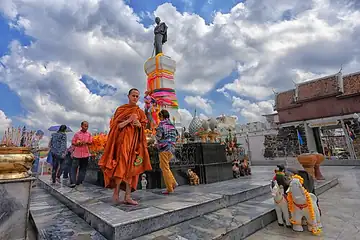 Nakhon Ratchasima · Stand at Thung SamritNakhon RatchasimaIn early 1827 the army of Chao Anouvong took Nakhon Ratchasima without a fight, because the governor and his deputy had taken the town's forces away…
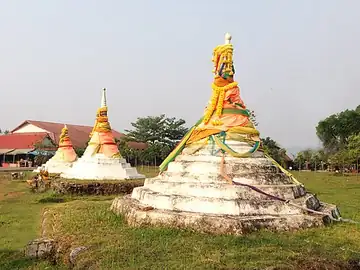 Kanchanaburi · Battle of Lat YaThree Pagodas PassThree Pagodas Pass is a gap in the Tenasserim Range at the far end of Sangkhla Buri district. It was the main military road between Martaban and…
Why is this site called Suranari?
Suranari means “brave woman”. It is the title King Rama III gave to Khun Ying Mo of Nakhon Ratchasima after the stand at Thung Samrit in early 1827. That event was not part of the Nine Armies' War: it came 41 years later, and the enemy was the army of Vientiane, not Burma. We tell both stories on one site because both were fights in which townspeople had to defend their own homes, and in both a woman led them. Read the story of Thao Suranari →
Frequently asked questions
The site is called Suranari. Why is it about the Nine Armies' War?
Suranari means “brave woman”. This site tells of the wars of the early Bangkok era in which townspeople, men and women alike, had to defend their own towns. The Nine Armies' War is the main story, because it was the largest war of that time and the heroines of Thalang were part of it. Thao Suranari of Nakhon Ratchasima, who bore the name, belongs to a different war 41 years later and has a page of her own.
What was the Nine Armies' War?
It was the war in which King Bodawpaya of Burma sent nine armies, 144,000 men in all, against Siam from five directions at once, from late 1785 to early 1786, in the reign of King Rama I. Siam had about 70,000 men, yet held on every front.
Did Thao Suranari fight in the Nine Armies' War?
No. Thao Suranari's stand at Thung Samrit took place in early 1827, in the reign of King Rama III, against the army of Chao Anouvong of Vientiane. The heroines of the Nine Armies' War are Thao Thep Krasattri and Thao Si Sunthon of Thalang.
Where can I visit the sites?
The easiest to reach are the Nine Armies' War Historical Park in Kanchanaburi, Khao Ngu Stone Park in Ratchaburi, the Thao Thep Krasattri and Thao Si Sunthon Monument in Phuket, and the Thao Suranari Monument in Nakhon Ratchasima. The Travel & food page lists them by province.