Home › Campaign routes › The 9th army through Mae Lamao Pass to Tak
The 9th army through Mae Lamao Pass to Tak
The 9th was the smallest of the nine armies, with 5,000 men. It came in through Mae Lamao Pass, the gap in the hills between Mae Sot and Tak, the same route Burmese armies had used many times since the Ayutthaya period. It took Tak without having to fight, and then withdrew without fighting as well.
- Enemy army
- Siamese army
- 1Stops, numbered as in the list below
- 4Key point, no fighting
- 1–3Several stops close together: tap to zoom in
- ≈ approximate position
Press + to zoom in, then drag to move the map; on a phone you can pinch. Tap a number to read about that stop.
The mark ≈ means an approximate position. Borders on the map are present-day borders, shown only to help you find places. The routes are approximate lines drawn from the chronicles and later studies, not the actual path step by step. Dashed lines are enemy armies; solid lines are Siamese armies.
An army waiting for another army
King Bodawpaya's plan was for the 9th army to take Tak and Kamphaeng Phet, then move down to join the 3rd army coming from the north, before both joined the royal army at Bangkok. But the 3rd army was stuck at Lampang. The 9th, with so few men, did not dare advance on its own, and sat waiting at Tak.
Siam posted Prince Thepharirak, Phraya Phra Khlang (Hon) and Phraya Uthaitham (Bunnag) at Chai Nat to meet any army that might come by way of Tak or Uthai Thani. When King Rama I's royal army moved north in March 1786, this force was sent up towards Kamphaeng Phet. When it arrived, its scouts reported that the Burmese had already gone.
The lesson of marching by many routes
The fate of the 9th army shows the weakness of the nine-army plan clearly. The armies on each route were hundreds of kilometres apart and could not get news to one another in time. When one army won or lost, weeks passed before the others knew. Siam, in the middle, could instead move the same troops to fight on one front at a time: first Lat Ya, then Ratchaburi, then Pak Phing, then down to the south.
The route in 3 stops
Dates on this page are in the Common Era. Thai sources date the war in the Buddhist Era, and old documents began the new year around April, so they count the events of January to March 1786 (BE 2329) as still falling in BE 2328. That is why many Thai books place the whole Nine Armies' War in BE 2328 (1785).
- 1
Martaban (assembly point of the Burmese main force)
The 9th army of Kyawgaung Nawrahta, 5,000 men, was the smallest of the nine. Its orders were to come in through Mae Lamao Pass, take Tak and Kamphaeng Phet, and then go down to join the royal army at Bangkok.
A port town at the mouth of the Salween River in Myanmar's Mon State. Its present name is Mottama, and it lies opposite Moulmein (Mawlamyine). In several wars with Siam the Burmese used it to assemble troops and stockpile supplies before crossing the frontier by Three Pagodas Pass or Mae Lamao Pass.
- 2
Mae Lamao Pass (Mae Sot)
The 9th army crossed the Moei River and the hills by Mae Lamao Pass, with no Siamese force to oppose it at the pass.
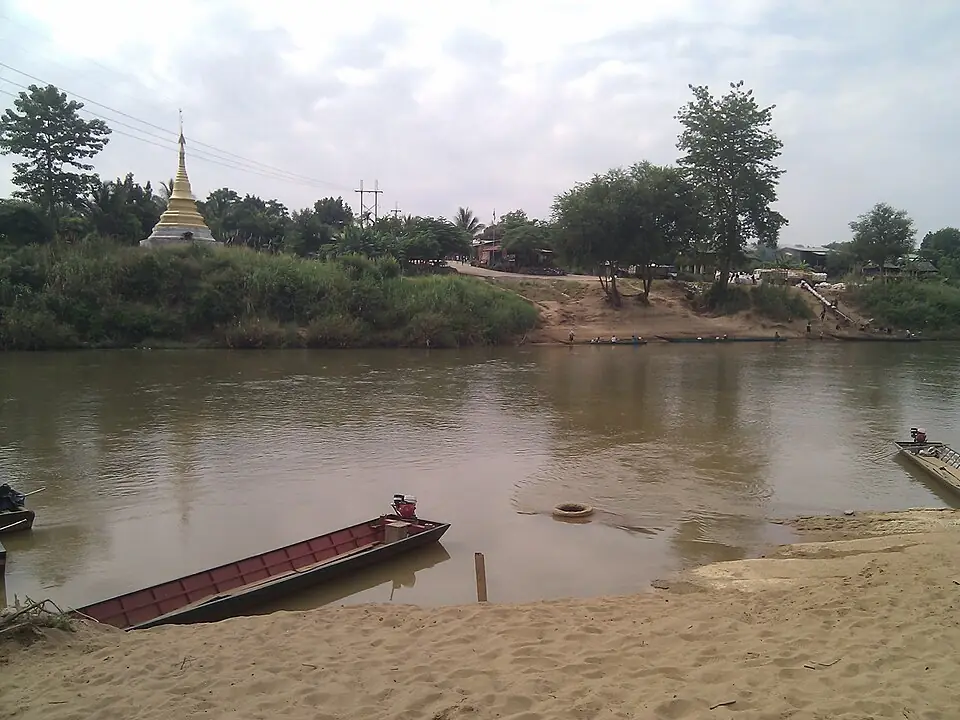
The Moei River at Mae Sot; the far bank is Myanmar · Photo: Manop · CC BY-SA 3.0 via Wikimedia Commons Mae Sot is a border town on the Moei River, opposite Myawaddy in Myanmar. The Tak–Mae Sot highway crosses the hills along the line of the old Mae Lamao Pass. On the way is the Chao Pho Phawo Shrine; local legend says he was a Karen officer who guarded this pass.
Position on the map: The coordinates are for the district town of Mae Sot. Mae Lamao Pass is the way across the Thanon Thong Chai Range between Mae Sot and Tak.
Places to visit nearby
- Chao Pho Phawo Shrine ↗Google Maps
- Rim Moei Market ↗Google Maps
Where to eat nearby
- Restaurants around this stop ↗Google Maps
- 3
Tak town (Rahaeng)
The governor of Tak had too few men to fight. The Thai chronicle says he abandoned the town and fled into the forest; the Burmese chronicle says he submitted and was sent to Burma with about 500 townspeople. The 9th army stayed at Tak without advancing further, waiting for news of the 3rd army.
Key point on this route- Against
- Burma's 9th army, 5,000 men
- Where
- The town of Tak at Ban Rahaeng, on the Ping River
- How
- Prince Thepharirak, Phraya Phra Khlang (Hon) and Phraya Uthaitham (Bunnag) marched from Chai Nat through Nakhon Sawan up to Kamphaeng Phet to attack the army at Tak.
- Outcome
- It never came to a clash. The 9th army learned that the Burmese had been broken at Pak Phing and withdrew through Mae Lamao Pass.
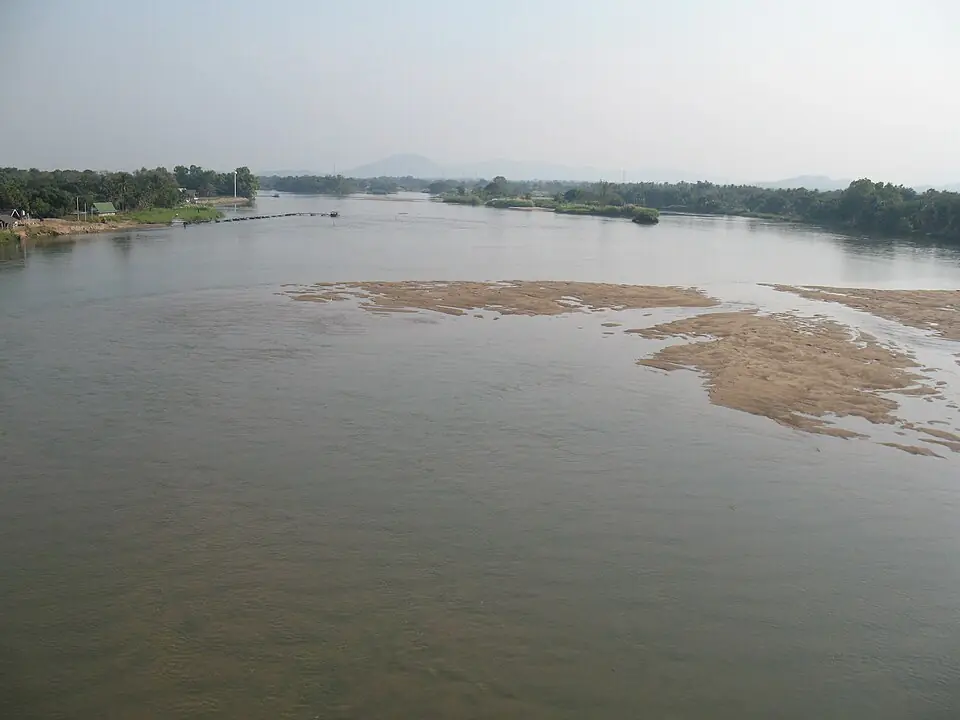
The Ping River at Tak, seen from Kittikhachon Bridge · Photo: Oatz · Public domain via Wikimedia Commons In those days the town of Tak stood at Ban Rahaeng on the Ping River, where the town is today. The old riverside quarter is Trok Ban Chin, a lane lined with old wooden houses. Nearby are a suspension footbridge over the Ping and the King Taksin the Great Shrine.
Places to visit nearby
- Trok Ban Chin ↗Google Maps
- King Taksin the Great Shrine ↗Google Maps
- Rattanakosin Bicentennial Bridge ↗Google Maps
Where to eat nearby
- Restaurants around this stop ↗Google Maps
Where historians still disagree
- Did the governor of Tak flee or surrender? The Thai chronicle says he abandoned the town and fled into the forest. The Burmese chronicle says he submitted and was sent to Burma with about 500 townspeople.
- The base of the 9th army: Thai Rop Phama supposes that it set out from Martaban, like the royal army. The line on the map from Martaban to Mae Sot is therefore approximate.
Frequently asked questions
Where is Mae Lamao Pass?
It is the way across the hills between Mae Sot district and the town of Tak, along the line of today's Tak–Mae Sot highway.
Did the 9th army fight the Siamese?
No. By the time the Siamese army reached Kamphaeng Phet, the Burmese had already left Tak.
Last updated 14 November 2026